
Auditing an architectural interior film manufacturer is a supply-chain decision, not only a design decision. B2B buyers should verify the company behind the quotation, the suitability of the film for interior and furniture surfaces, sample-to-batch consistency, converting quality, traceability, packaging, technical response, and claim handling before approving a bulk order.
This guide is written for distributors, importers, contractors, furniture manufacturers, designers, and commercial-project procurement teams comparing an interior film manufacturer, interior film supplier, or PVC decorative film manufacturer. It combines a 12-step factory audit with evidence requests that can be used during an on-site visit or remote video audit.
Written by: CAVIOSEN Content Team | Last reviewed: August 5, 2026
Why an Interior Film Factory Audit Matters
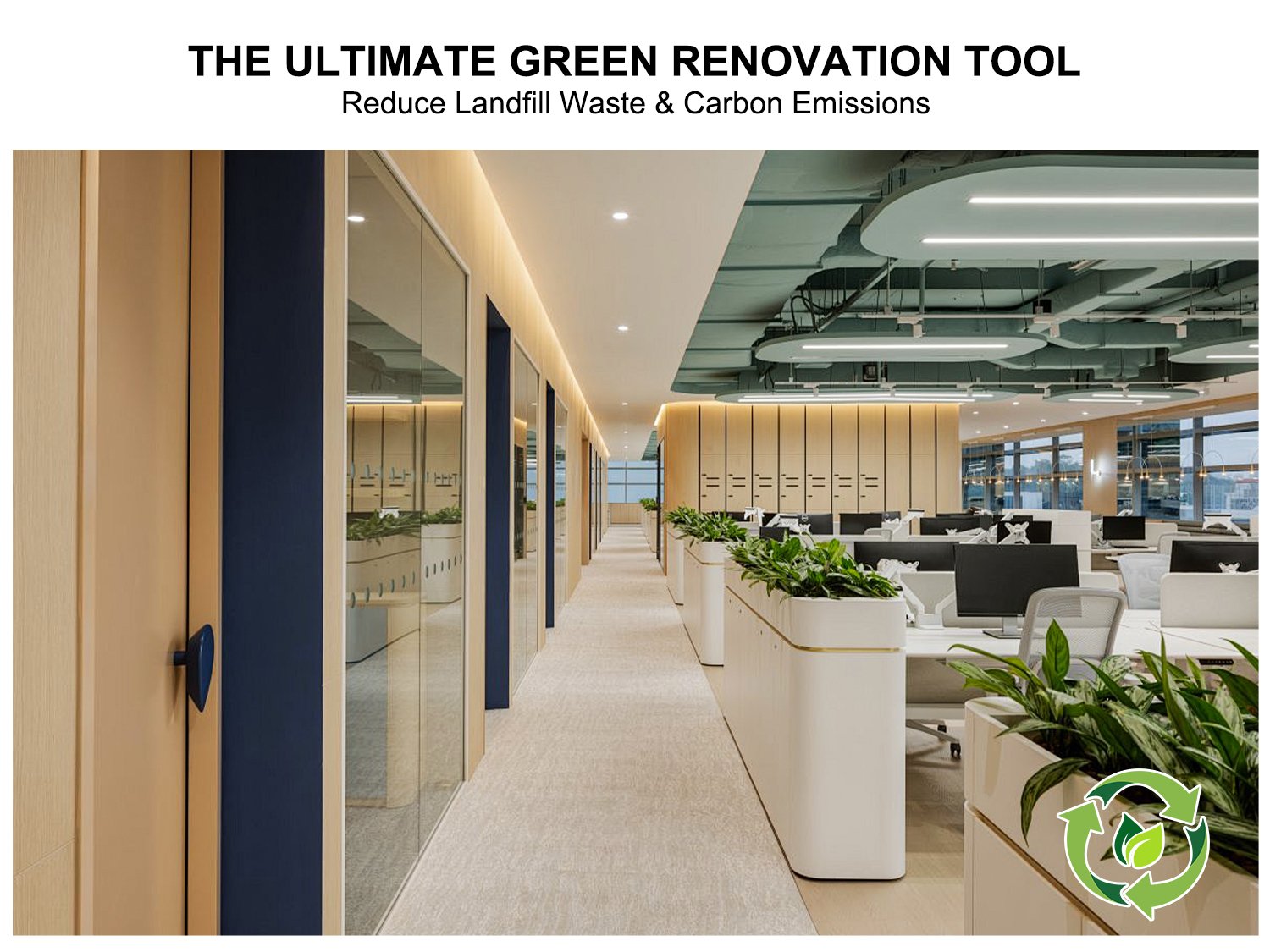
Architectural interior film is a self-adhesive decorative surface material used to renovate suitable indoor walls, doors, cabinets, counters, panels, lift interiors, and furniture surfaces. The finished result depends on the decorative face, adhesive, release liner, converting quality, substrate preparation, installation method, and consistency of the supplied batch.
A showroom sample can look excellent while production orders still vary in color, gloss, embossing, roll width, winding, edge condition, packaging, or labeling. A structured factory audit reveals whether an architectural film manufacturer can repeat an approved specification, document the order, and support a distributor or project buyer after the purchase order is placed.
1. Verify the Manufacturer’s Legal Identity
Before comparing products, confirm which legal entity will manufacture, invoice, export, and accept responsibility for the order. Ask for the business license, registered address, factory address, company ownership information, export entity, and years of operation. If manufacturing and export are handled by different entities, request a clear written explanation of the relationship.
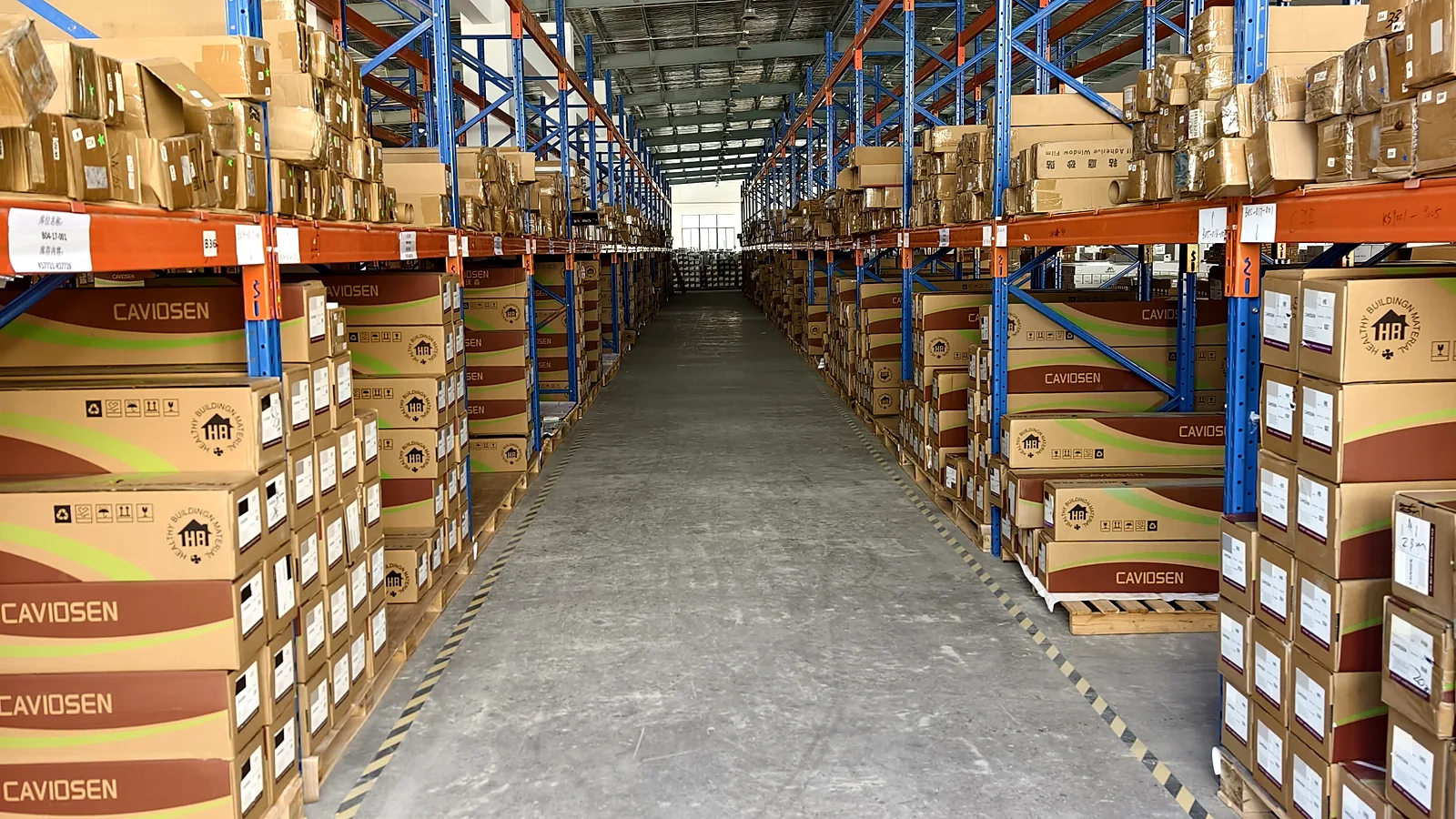
Match the company name and address across the quotation, proforma invoice, bank details, test reports, website, and shipping documents. A factory visit or live video call should begin outside the facility and continue through production, converting, inspection, packing, and warehouse areas. Buyers can review the CAVIOSEN factory and production capabilities before arranging a more detailed audit.
2. Define the Application and Substrate
A reliable architectural interior film supplier should ask where and how the film will be installed before recommending a finish. Share the substrate, surface condition, project type, expected traffic, design direction, required roll dimensions, installation schedule, destination market, and cleaning routine.
- Walls and partitions: confirm flatness, joints, existing coatings, and likely impact exposure.
- Doors and cabinets: identify edges, grooves, corners, hardware, and wrapping details.
- Furniture panels: specify the board type, surface treatment, panel size, and production method.
- Commercial interiors: explain operating hours, phased-renovation limits, and maintenance requirements.
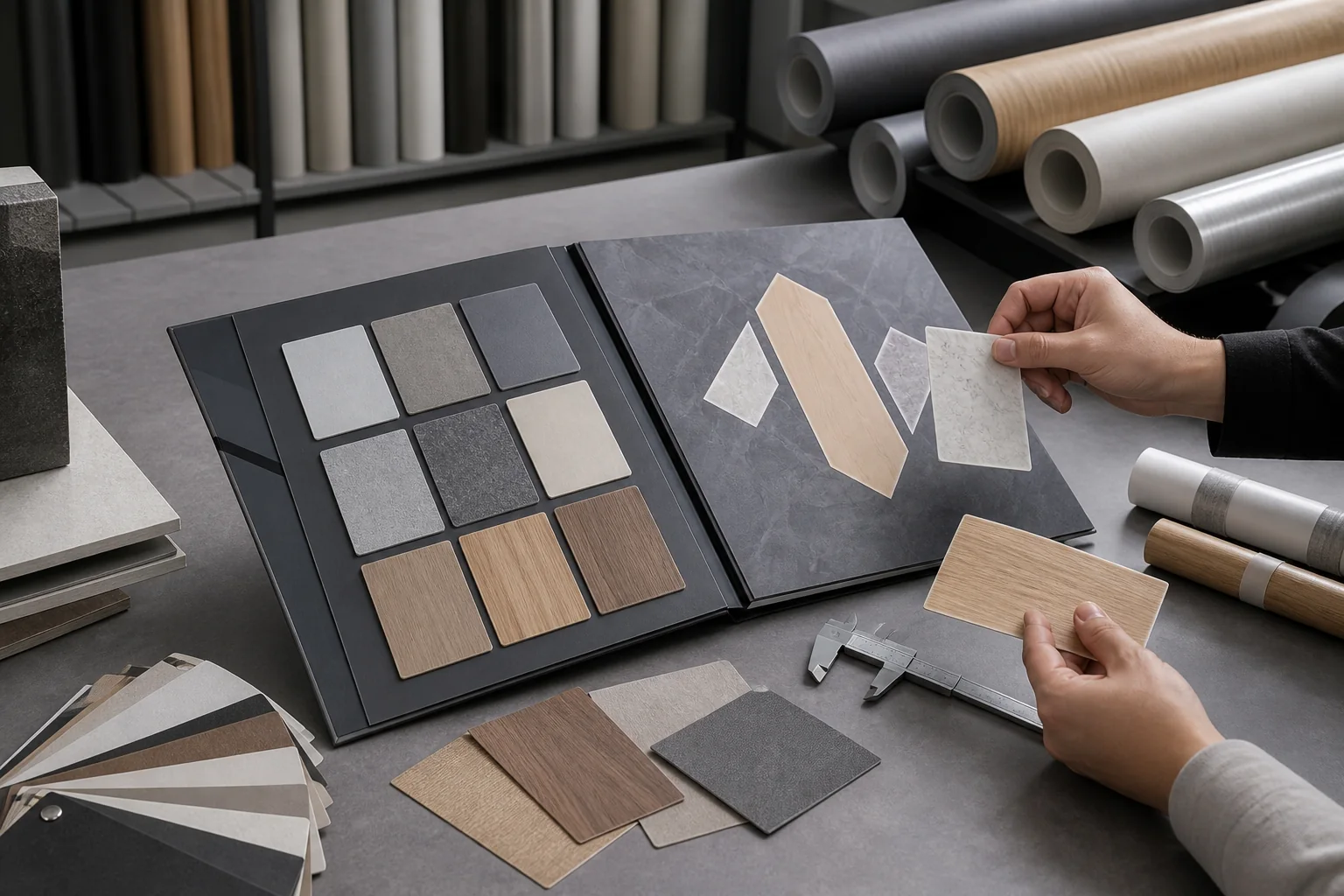
Review CAVIOSEN’s architectural interior film collections by wood, metallic, leather, solid, skin-touch, dichroic, cement, marble, and fabric effects, then shortlist finishes against the actual substrate and application—not a screen image alone.
3. Check Sample-to-Batch Consistency
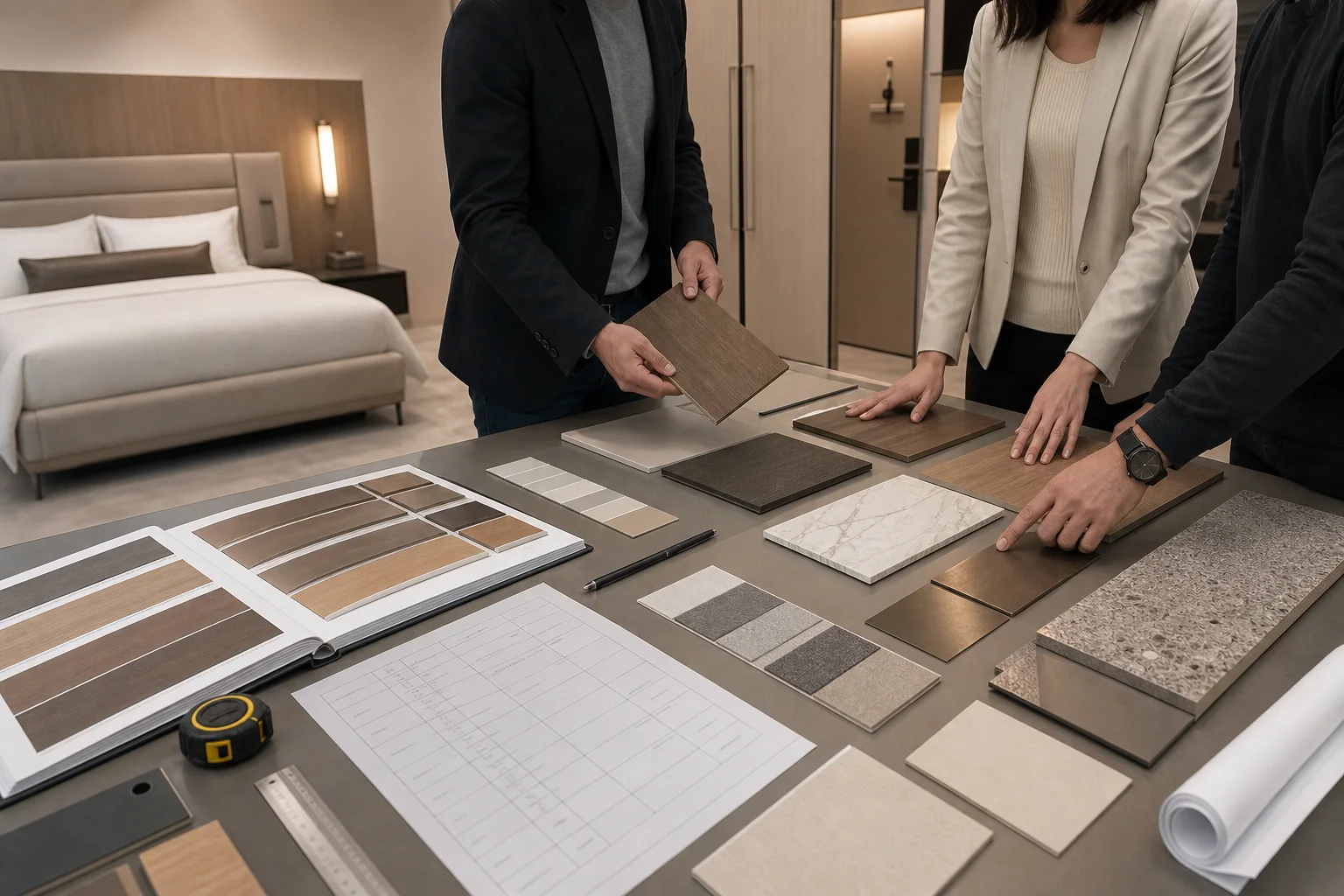
Approve a physical sample under the lighting used in the project and keep it as a receiving reference. Ask how the factory controls color, gloss, embossing, surface texture, and repeat appearance between production batches. For phased projects, discuss whether all rolls should be produced or reserved together.
During the audit, compare the sample-book code with the production order, roll label, carton label, invoice, and packing list. Ask whether reference samples are retained and how a repeat order is matched to an earlier supply. The practical objective is a traceable chain from the approved finish to every delivered roll.
4. Inspect Slitting, Rewinding, and Roll Quality
Poor converting can slow installation even when the decorative surface is correct. Inspect the slitting and rewinding area for clean equipment, protected material paths, orderly roll handling, controlled winding, and clear product identification.
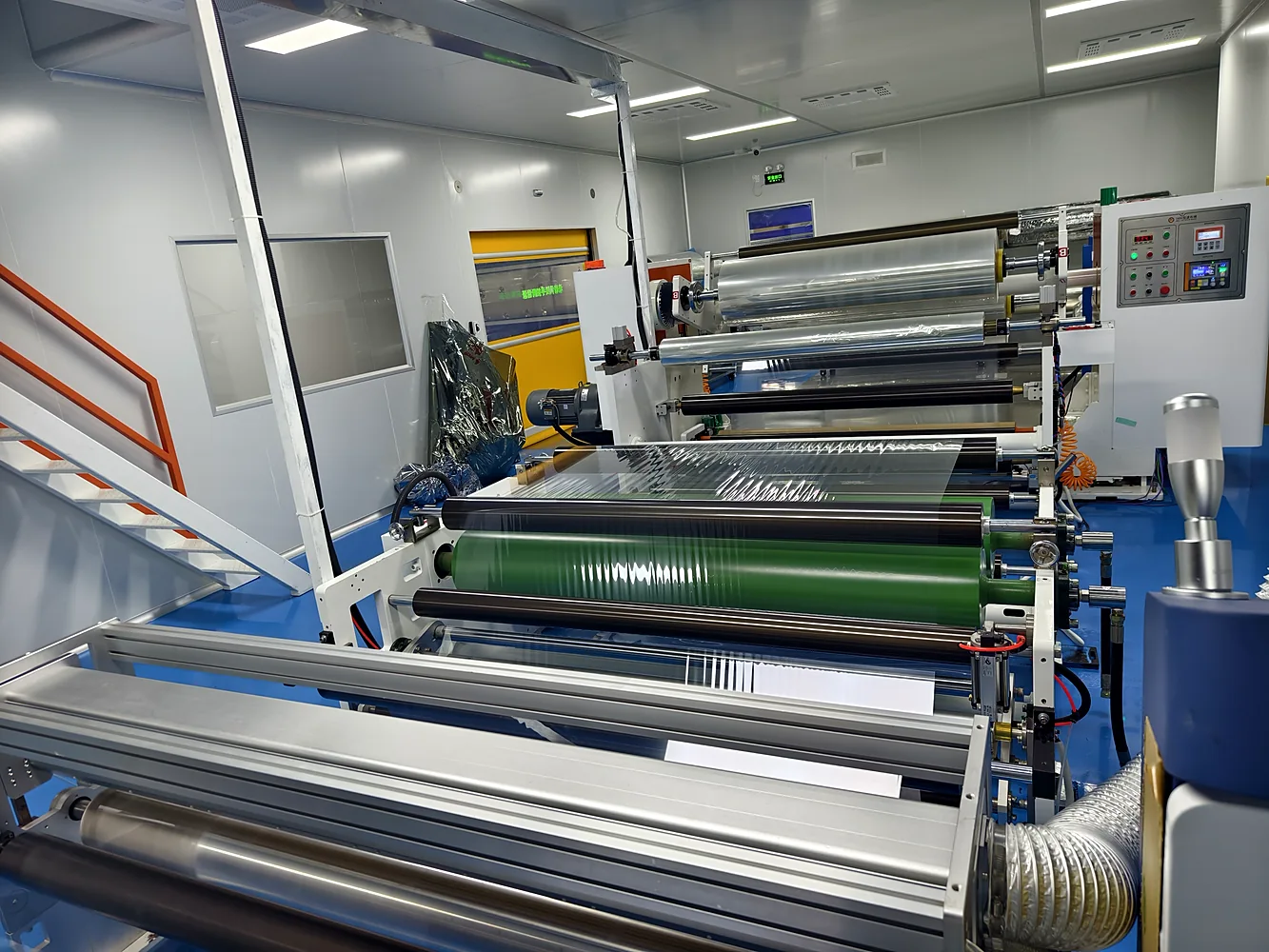
For the selected series, request the agreed roll width, length, winding direction, core specification, edge standard, and tolerances in writing. Ask operators to explain how they identify damaged edges, wrinkles, loose winding, telescoping, contamination, or splices before a roll is released for packing.
5. Evaluate Film Construction and Adhesive
An architectural interior film is a system made up of a decorative face, adhesive, and release liner. Request construction and performance information for the exact series being purchased. Do not assume that every finish has identical characteristics or that every wall, wood-based panel, metal surface, or existing laminate needs the same preparation.
Use trial panels to verify initial adhesion, conformability, air removal, edge treatment, appearance, and the installation workflow. Confirm cleaning, primer, temperature, and substrate-preparation requirements where applicable. CAVIOSEN’s interior film technical specifications and インストレーションガイド are useful starting points, but the final method should be validated on the actual substrate.
6. Verify Production Capacity and Lead Time
Installed equipment does not automatically equal available capacity. Ask for the number and function of production and converting lines, typical monthly output for the relevant product family, current utilization, standard lead time, peak-season lead time, maintenance arrangements, and backup production plan.
Test the answer against a realistic order: provide the product codes, roll specification, quantity, mixed-pattern ratio, packaging requirement, and requested shipping date. A credible manufacturer should explain the production sequence, material availability, inspection time, packing time, and the point at which the order can no longer be changed.
7. Review Quality-Control Records and Tolerances
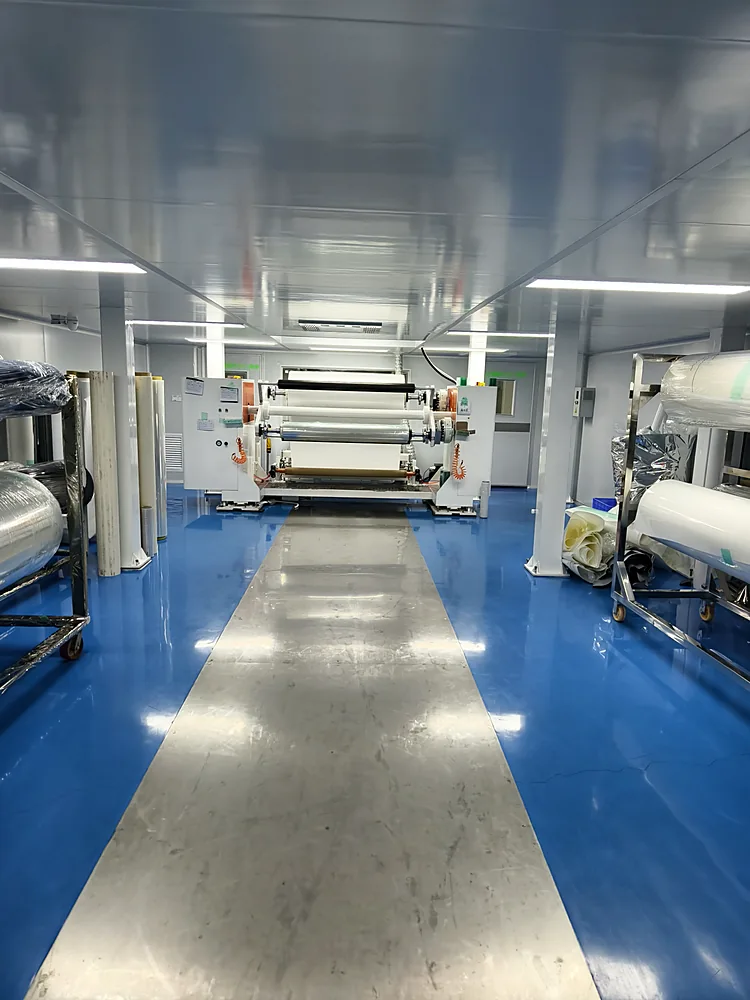
Quality claims become useful only when they are tied to the ordered product and an inspection record. Ask what is checked at incoming-material, in-process, and final-inspection stages, who releases the roll, and which information is recorded.
Request written acceptance criteria for roll width and length, color and gloss variation, embossing appearance, edge damage, wrinkles, telescoping, contamination, surface defects, splices, and packaging damage. If a tolerance is important to installation or furniture production, place it in the purchase specification rather than relying on a general brochure statement.
For important projects, approve a pilot quantity before releasing the full order. At receiving, record the purchase order, product code, batch or roll reference, quantity, roll condition, carton condition, and any visible variation immediately after arrival.
8. Check Test Reports and Certifications
Do not accept a certificate or test report only because it carries a familiar standard name. Confirm the tested company, product model, test standard, laboratory, report number, issue date, validity, tested construction, and whether the exact film series being purchased is covered.
Ask the supplier to explain any difference between a product-family report and the specific finish or construction on your purchase order. If the project, destination market, or client requires a particular document, make document approval a condition before production rather than a request made after shipment.
9. Examine Packaging and Batch Traceability
Architectural film may pass through a factory warehouse, freight forwarder, container, distributor warehouse, and jobsite before installation. Packaging must protect roll ends, faces, labels, cores, and cartons throughout that route.
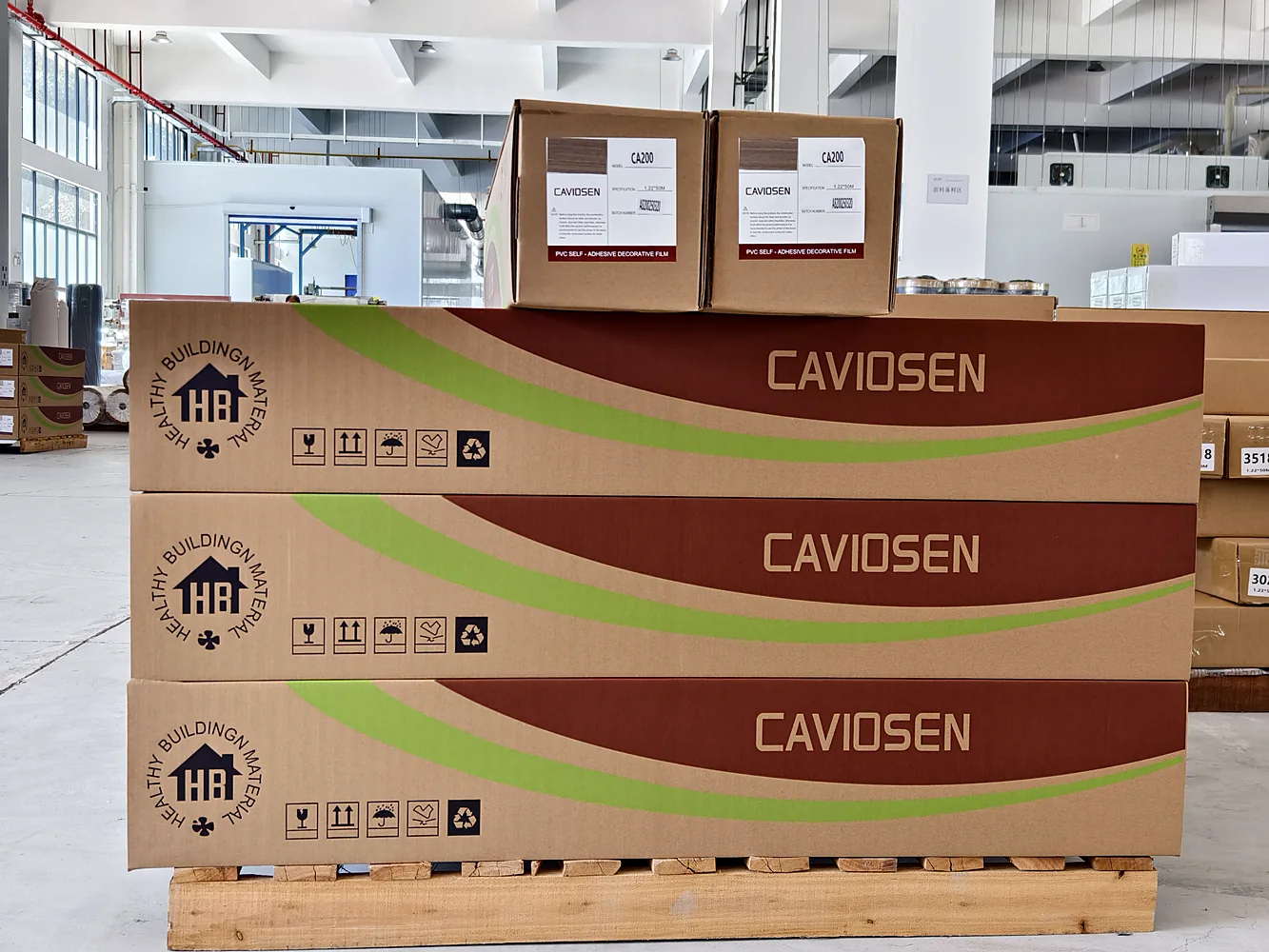
CAVIOSEN’s warehouse and packing photographs show product-code cartons organized for storage and dispatch. During an audit, go one step further: select a carton and ask the team to trace it back to the order, product code, roll or batch reference, inspection status, and packing list. For mixed-pattern shipments, request packing photos and a carton sequence that lets the receiving team identify products without opening every roll.
10. Test Technical and Sales Communication
Supplier responsiveness is part of product quality. Before placing a large order, send a realistic enquiry with several product codes, applications, quantities, dimensions, destination, and deadline. Review whether the reply confirms the requested product, identifies missing information, explains sample arrangements, clarifies commercial terms, and flags schedule risks.
For distributors, ask who owns product selection, technical questions, order follow-up, shipping documents, and claims. Buyers considering regional representation can review the architectural interior film distributor program. Existing project and buyer feedback is available on the CAVIOSEN customer reviews page.
11. Review Complaint and Corrective-Action Procedures
Ask for the claim-submission period, required evidence, responsible contact, investigation process, root-cause method, replacement or credit procedure, and expected response time. Clarify which photos, labels, roll references, unused material, installation records, and retained samples may be required.
A useful corrective-action response should identify the affected order and batch, contain the immediate risk, explain the likely cause, define the corrective action, and state how recurrence will be prevented. Agree on this workflow before the first large order; negotiating it after a project problem is slower and more expensive.
12. Compare Total Project Cost
The lowest roll price can become expensive when a buyer later faces inconsistent batches, damaged edges, unclear labels, missing documents, poor packaging, delayed replacement, or difficult communication. Compare quotations using the same specification and include sampling, order quantity, roll dimensions, yield, packaging, documentation, delivery terms, and after-sales response.
For commercial projects, include substrate preparation, pattern planning, installation training, contingency material, and downtime. For distributors, include inventory clarity, reorder accuracy, sample support, mixed-pattern packing, and claim-resolution speed. These factors determine the real value of an architectural film supplier.
Interior Film Manufacturer Audit Checklist
| Audit area | What to verify | Evidence to request |
|---|---|---|
| Company verification | Legal entity, factory address, manufacturer/export relationship | License, addresses, invoice and bank-name match |
| Application fit | Substrate, indoor use, traffic, finish, preparation | Application questions and trial recommendation |
| Raw materials | Decorative face, adhesive, release liner, product construction | Series-specific construction information |
| Appearance control | Color, gloss, embossing, approved reference, repeat orders | Physical samples and reference-control method |
| Converting | Width, length, edges, winding, core, contamination | Live line review and written tolerances |
| Capacity and lead time | Available lines, current load, peak season, backup plan | Order-specific production and delivery schedule |
| Testing | Standard, laboratory, report number, covered product model | Applicable test reports and certificates |
| Quality control | Incoming, in-process, final checks, release authority | Inspection record and defect criteria |
| Traceability | Product code, batch or roll reference, production record | Roll labels, carton labels, packing list |
| Packaging | Core, end protection, cartons, mixed-code separation | Packing specification and pre-shipment photos |
| Claims | Submission period, evidence, investigation, corrective action | Written claim and replacement procedure |
| Commercial terms | MOQ, payment, trade terms, samples, change cut-off | Complete written quotation and order confirmation |
Frequently Asked Questions
What is architectural interior film used for?
It is used to decorate or renovate suitable indoor walls, doors, cabinets, counters, panels, lift interiors, and furniture surfaces. The substrate and installation method should be validated before a bulk order.
How should a B2B buyer compare interior film manufacturers?
Compare the same film construction and specification, then evaluate company identity, sample consistency, converting quality, capacity, test documents, quality records, traceability, packaging, claims, and technical response—not roll price alone.
Can a factory audit be completed by video?
A live video audit can be useful when travel is not practical. Request a continuous walkthrough of the exterior, production, converting, inspection, warehouse, and packing areas. Ask the team to trace a selected carton or roll instead of showing only prepared promotional views.
Should I request samples before a bulk order?
Yes. Approve a physical sample on the intended substrate and under project lighting. For a large or phased order, consider a pilot quantity and discuss batch planning before full production.
What information should I send with an enquiry?
Provide your company, business type, country, intended application, substrate, product codes or design direction, estimated quantity, destination, required delivery date, and any testing, documentation, or packaging requirements.
Request Business Samples
CAVIOSEN supports qualified distributors, importers, contractors, furniture manufacturers, designers, and project buyers evaluating architectural interior film for commercial interiors and furniture surfaces.
Download the architectural interior film catalogue to shortlist finishes, then request business samples or submit a project enquiry. Please include your company name, business type, country, website or social page, intended application, estimated quantity, interested series, delivery destination, and target schedule. Sample availability, courier arrangements, and charges are confirmed before dispatch.
 English
 Spanish
 Japanese
 Russian
 Indonesian
 Vietnamese
 Thai
Thai German
 Polish
 Korean
 Italian
 French
 Dutch
Dutch