
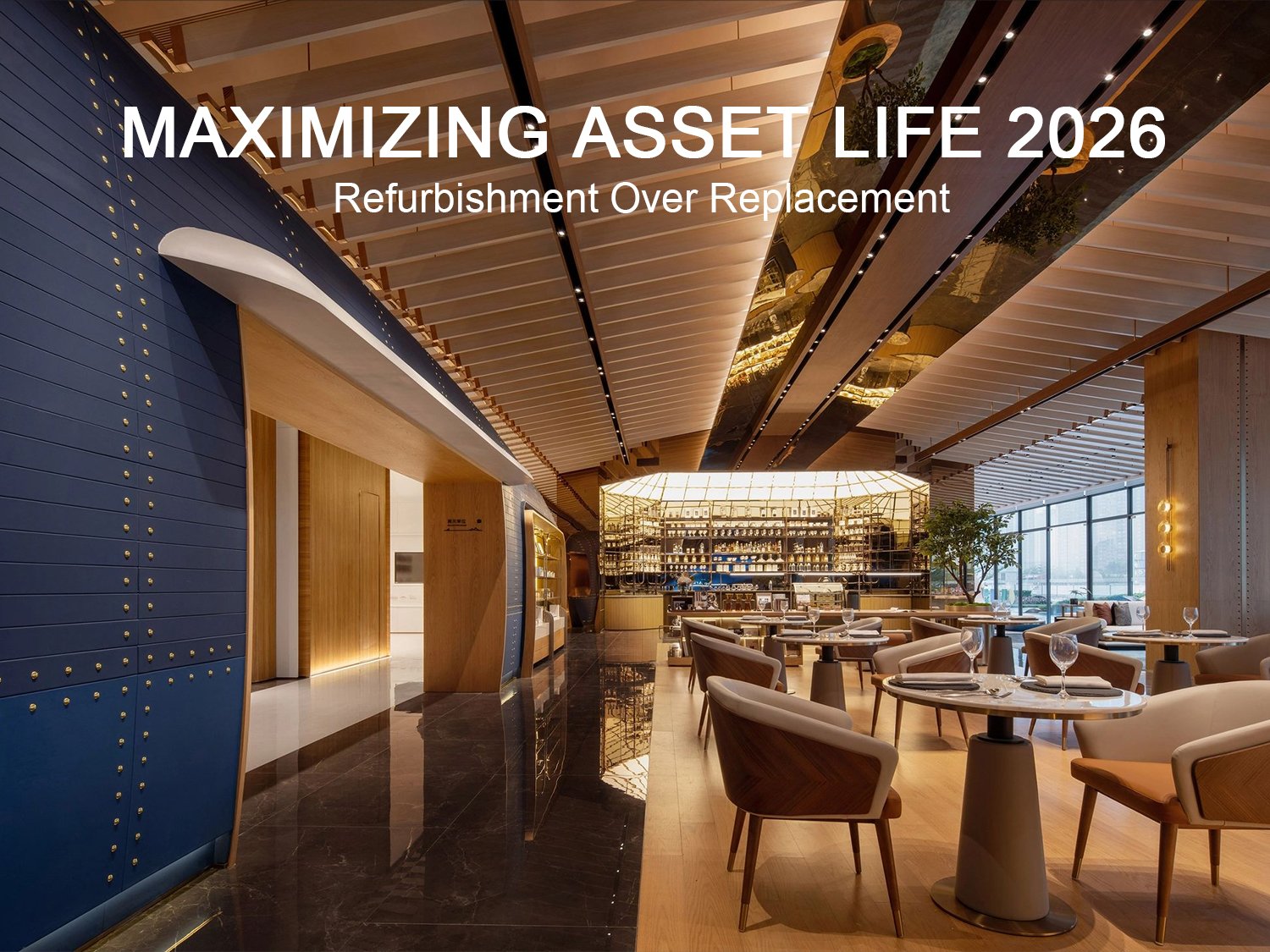
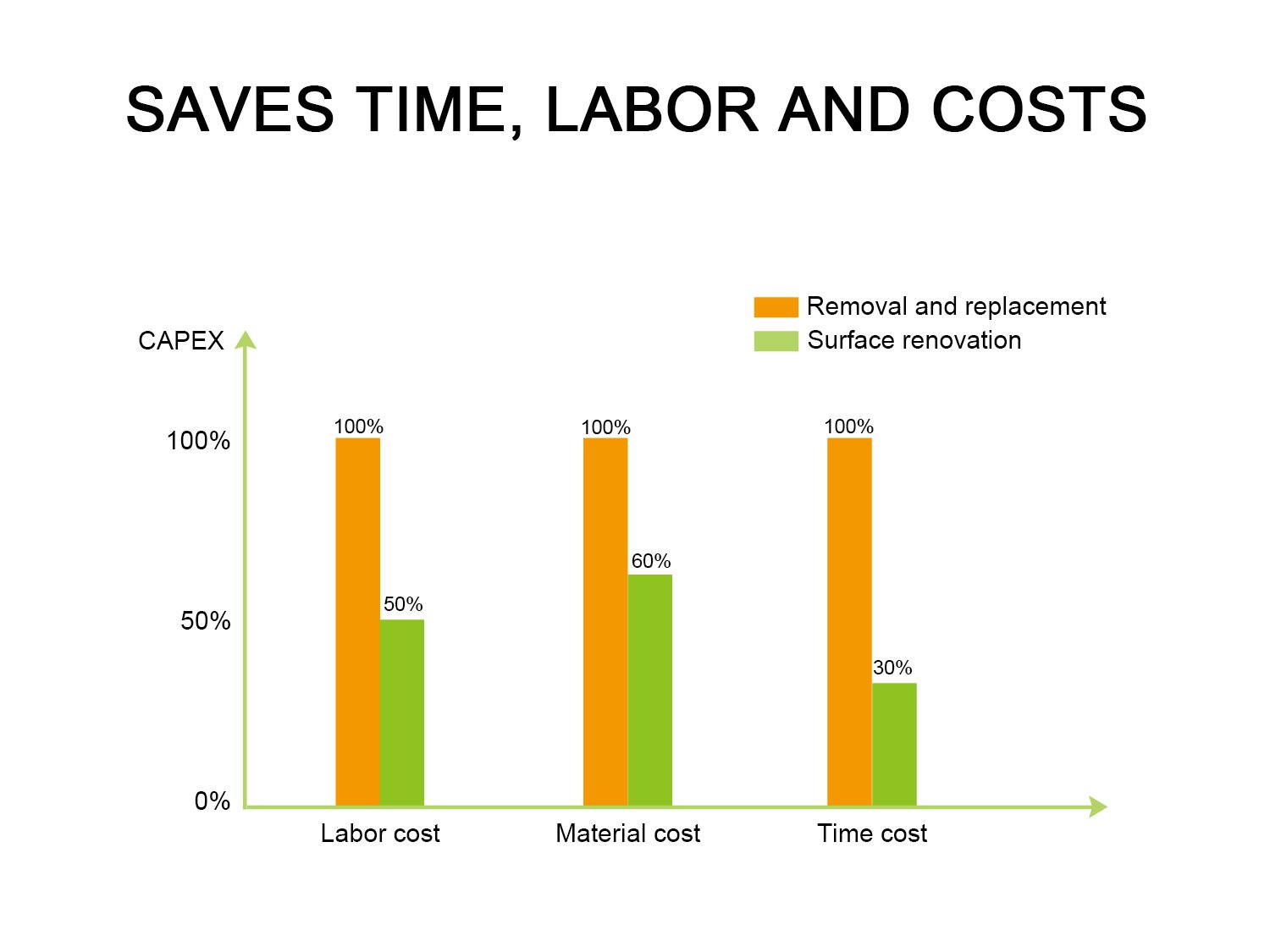
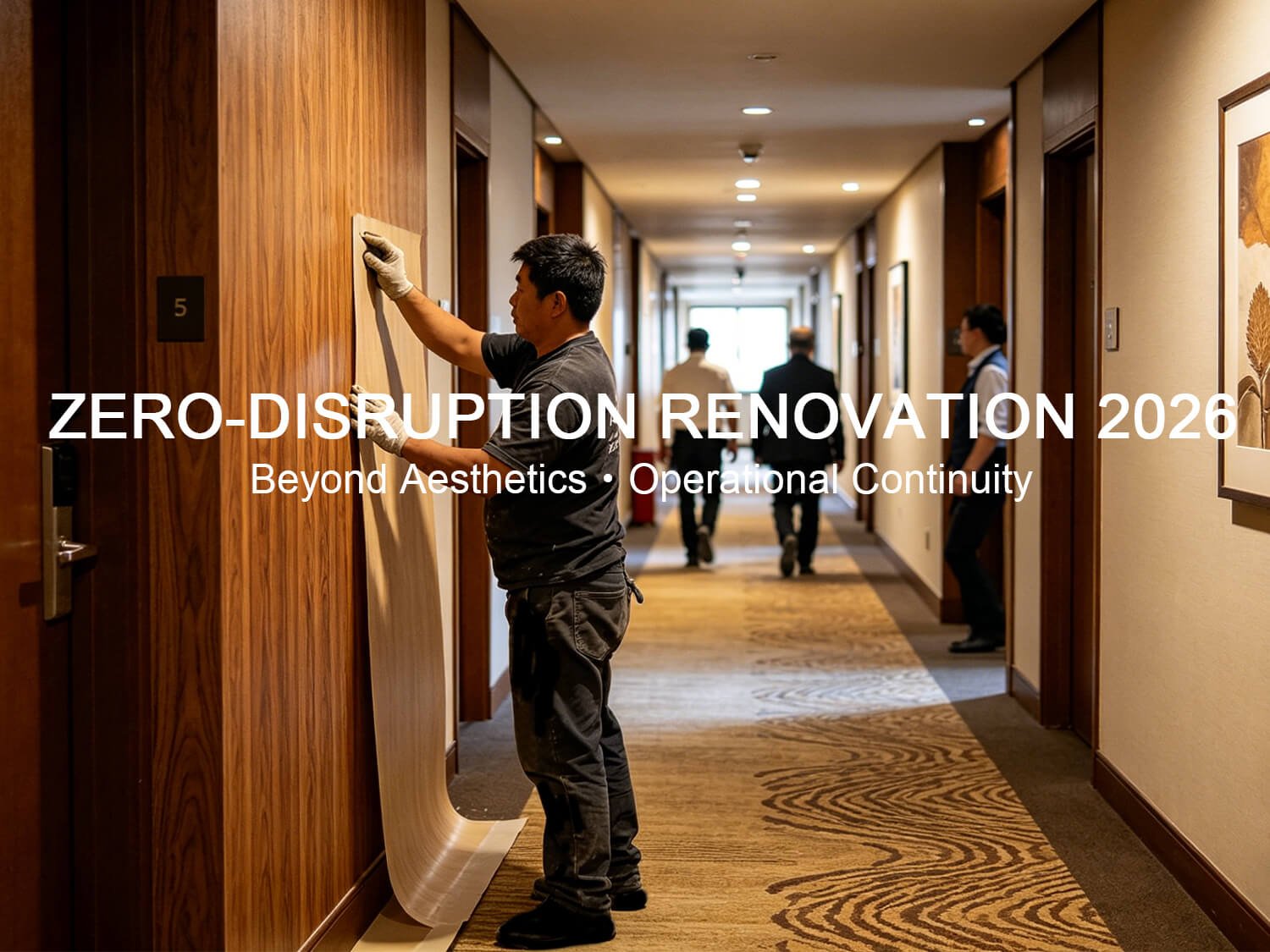
For hotel owners, facility managers, and retail brands, the real cost of renovation isn’t the invoice from the contractor—it’s the lost revenue during downtime. Closing a commercial space for two weeks to replace furniture or repaint walls can cost more than the renovation itself.
In 2026, the trend has shifted toward surface resurfacing (Interior Film). However, not all films are created equal. Choosing the wrong material can lead to peeling, scratching, and a ‘cheap’ look within months. To help you avoid these costly pitfalls, we’ve outlined the three essential technical benchmarks every project manager must verify before signing a contract.
1. Wear Resistance: The “7,000 Rotation” Benchmark
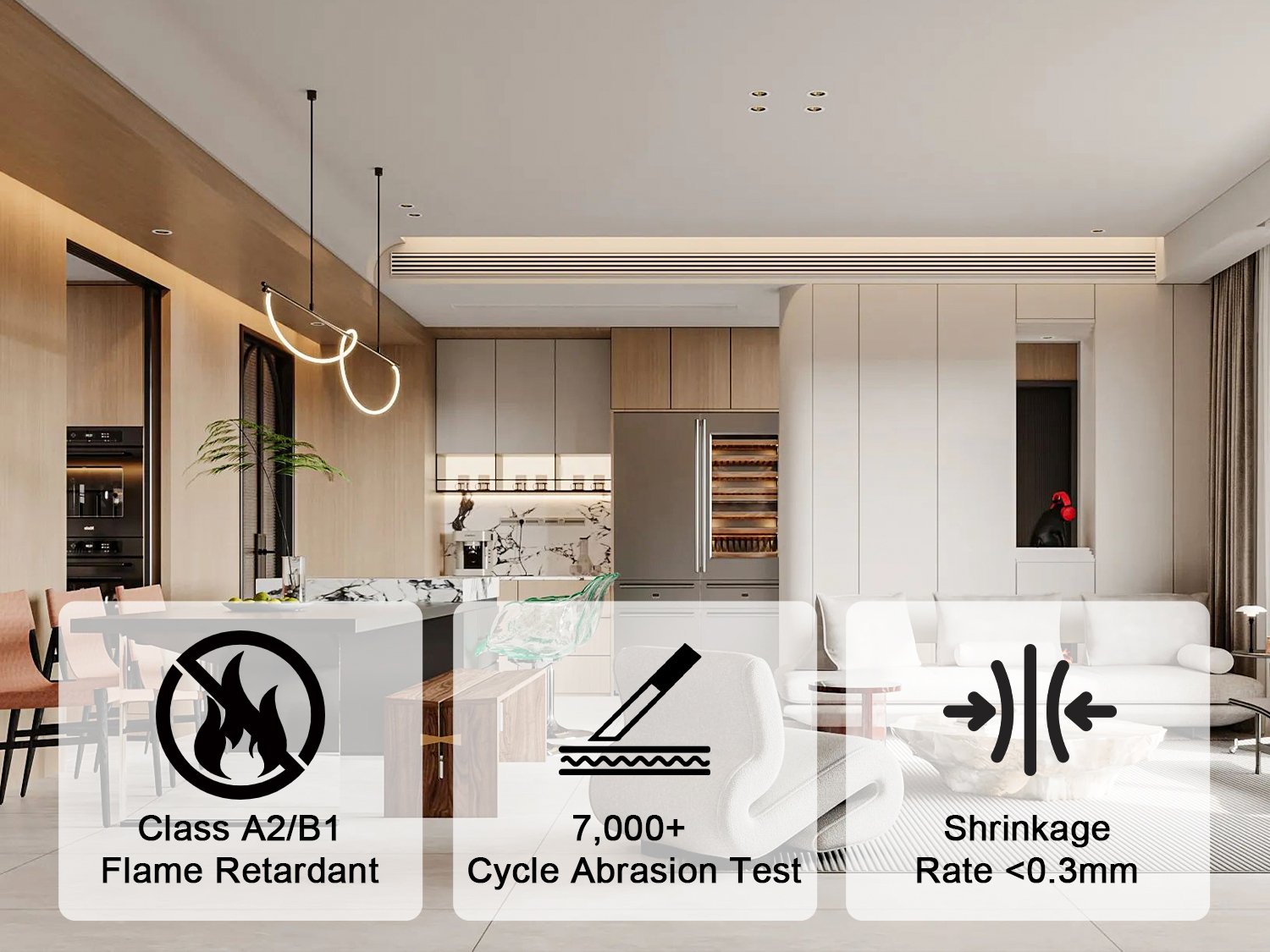
In high-traffic areas like reception desks, elevator interiors, and restaurant tables, standard decorative vinyl fails quickly. When evaluating Interior Film, always ask for the Taber Abrasion Test results.
• The Pitfall: Cheap films often show signs of wear after 500–1,000 rotations.
• The Standard: A professional-grade architectural film should withstand 7,000 rotations (CS-10 runner) without the surface pattern changing. This ensures a 10-year lifespan in demanding commercial environments.
2. Dimensional Stability: Preventing the “Seam Gap”
One of the most common complaints with low-quality film is shrinkage. Over time, poor-quality PVC contracts, leaving unsightly gaps at the seams that trap dirt and ruin the aesthetic.
• The Pitfall: Films with high plasticizer migration can shrink by 1mm to 3mm within the first year.
• The Standard: Look for materials with a Dimensional Stability rating of < 0.3mm. This level of precision ensures that the seams stay invisible.
3. Bio-Safety: Antibacterial Value > 20
Post-pandemic commercial design prioritizes hygiene. Modern surfaces must do more than just look good; they must actively inhibit the growth of bacteria.
• The Pitfall: Porous materials like real wood or low-end laminates can harbor bacteria and are difficult to sanitize with harsh chemicals.
• The Standard: Ensure your interior film has been tested for Antibacterial Activity (against Staph and E. Coli). A value of 20 or above indicates a surface that is safe for healthcare and hospitality facilities.
Aesthetic Versatility: Why 350+ Patterns Matter
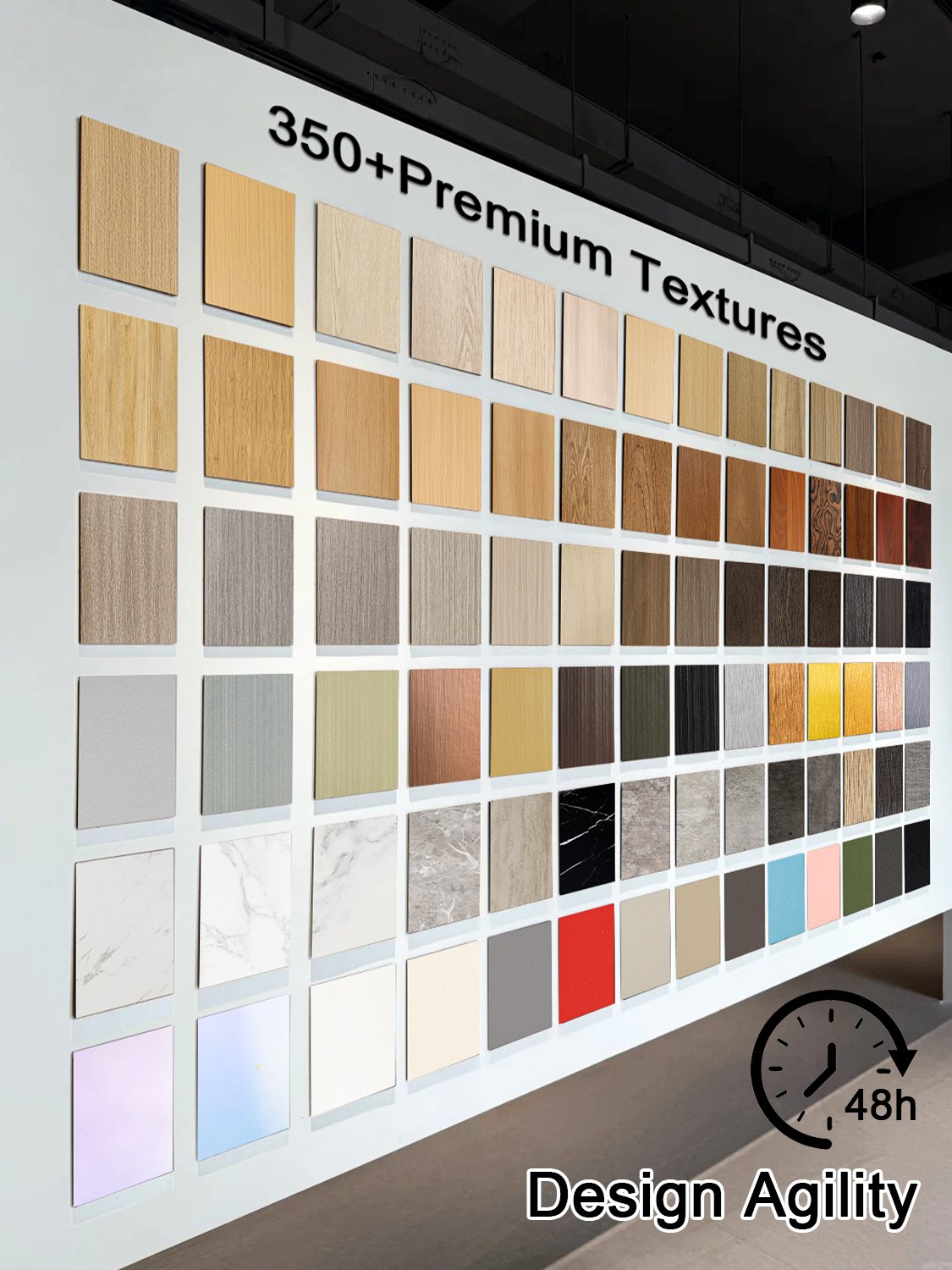
A common mistake is choosing a supplier with a limited catalog. Commercial projects often require a mix of wood, stone, metal, and fabric textures to create a cohesive brand identity. A professional supplier should offer a curated library of at least 350+ high-fidelity patterns.
Conclusion: Making the Right Choice
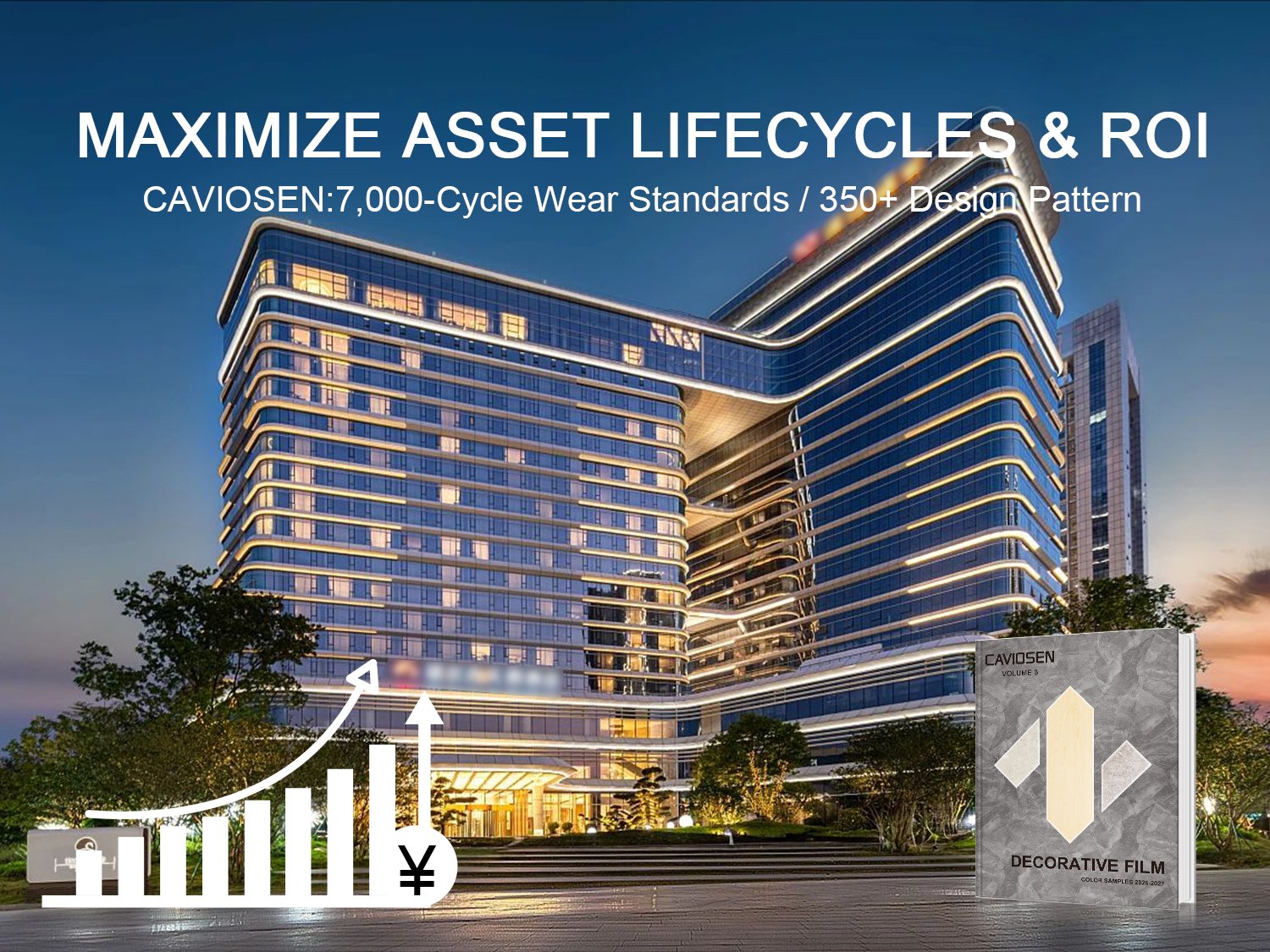
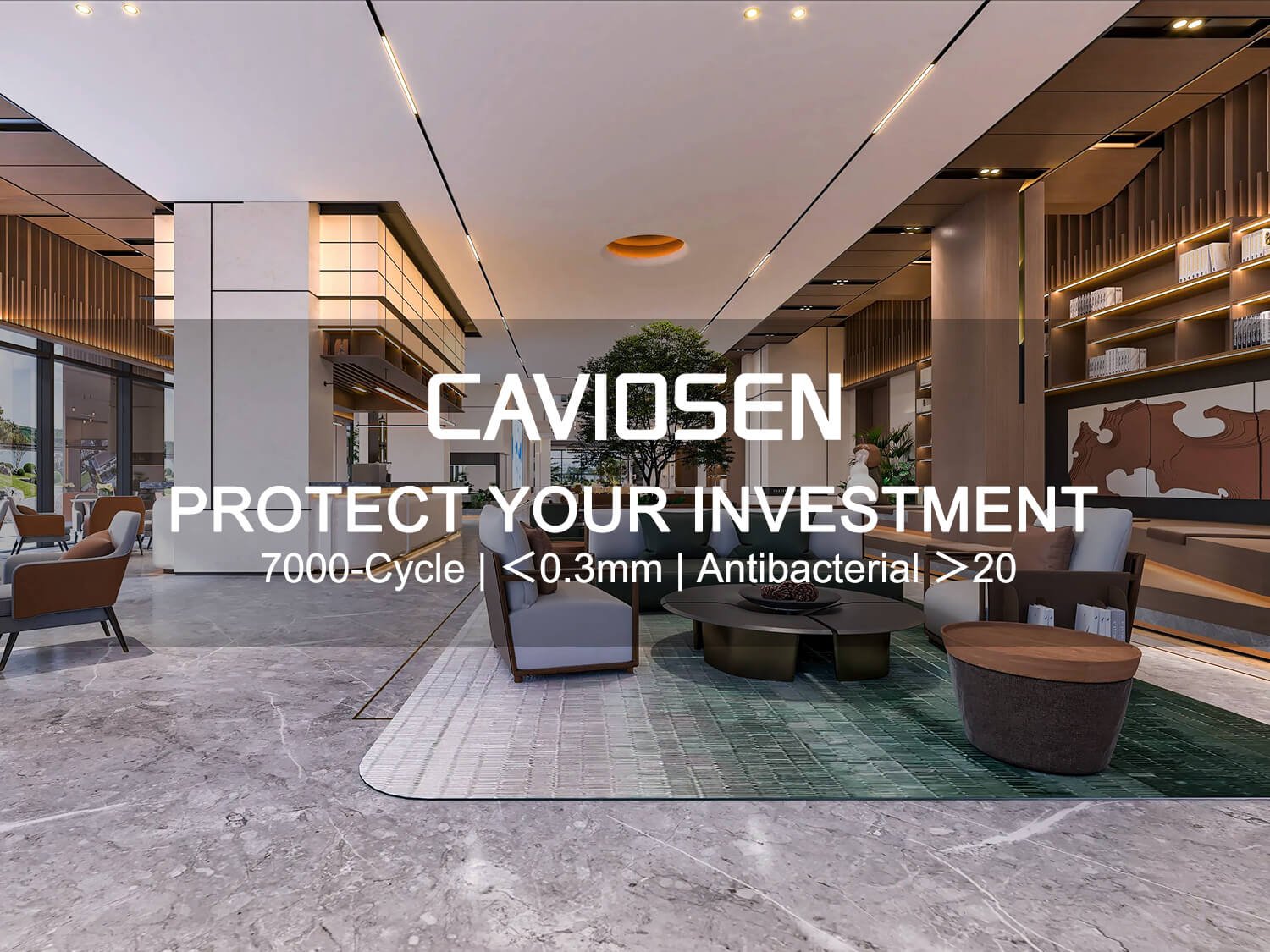
Choosing the right interior film is about balancing cost, speed, and technical integrity. By insisting on these three benchmarks—7,000-cycle wear resistance, < 0.3mm stability, and high antibacterial values—you protect your investment and ensure a premium finish that lasts.
Expert Reference: These technical standards are the baseline for top-tier manufacturers like CAVIOSEN. As a specialist in architectural surface solutions, CAVIOSEN’s collection of 350+ patterns is engineered to meet these exact 2026 commercial benchmarks.
Transform Your Space Today
[Download the Full 350+ Pattern Catalog]
 English
 Spanish
 Japanese
 Russian
 Indonesian
 Vietnamese
 Thai
Thai German
 Polish
 Korean
 Italian
 French
 Dutch
Dutch